What can diagnostics do for a brand MG?
The MG diagnostic tool from DevCom offers basic functions such as reading and clearing faults, as well as several advanced functions listed below.
-
Autodetection of control units
-
Bulk read and delete faults
-
Parameter reading and logging
All this for a total of 1 vehicle models. The latest version of diagnostics for this brand is from 2023 (version MG v1).
Supported models
Our diagnostics are compatible with selected models of the MG brand. Supported models include various years and variants. Please contact us to verify compatibility with your vehicle. An overview of supported models can be found below.
-
ZS (2018+)
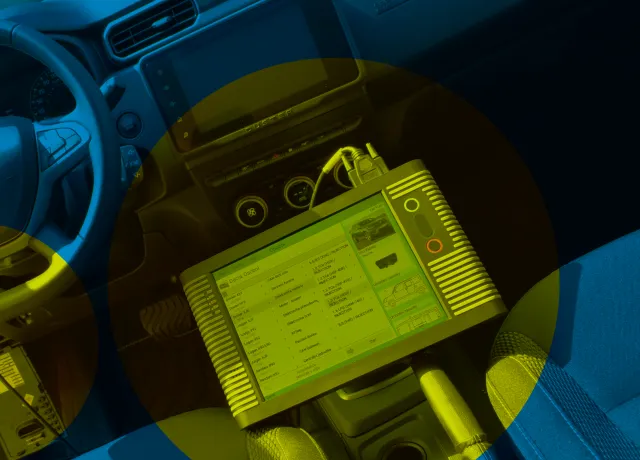
Our diagnostics for the brand MG
Our diagnostic solutions for MG vehicles allow you to choose exactly what you need. We offer the powerful TSPro 10 standalone diagnostic tool, the professional Troodon OBD Pro diagnostic interface, or the simpler Troodon OBD Basic, which is also ideal for home use. Troodon diagnostic tools can be connected to any PC or controlled from your mobile phone. All our diagnostic tools are developed and manufactured in Prague, in the heart of Europe.

Troodon OBD Basic Diagnostics + software CAR Basic
6 900 CZK excl. VAT
- Simple interface for one selected brand
- DoIP support
- Fast and seamless diagnostics directly from your PC or mobile device
- Ideal solution for home use
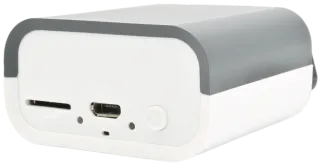
Troodon OBD Pro Diagnostics + software CAR Mixed
31 480 CZK excl. VAT
- Diagnostics for up to 10 brands of your choice
- Support for SGW and DoIP
- Support for older vehicles
- Fast and seamless diagnostics directly from your PC or mobile device
- Expansion option for other vehicle types
Troodon OBD Pro Diagnostics + software CAR One
13 360 CZK excl. VAT
- A professional diagnostic interface that can be expanded with additional vehicle brands
- Support for SGW and DoIP
- Support for older vehicles
- Fast and seamless diagnostics directly from your PC or mobile device
Troodon OBD Pro Diagnostics + software CAR Multibrand
42 460 CZK excl. VAT
- Interface with support for all passenger cars and light commercial vehicles
- Support for SGW and DoIP
- Support for older vehicles
- Fast and seamless diagnostics directly from your PC or mobile device
- Expansion option for other vehicle types
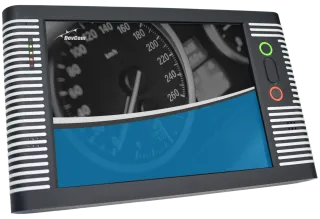
Diagnostics TSPro 10 + software CAR One
41 420 CZK excl. VAT
- Complete diagnostics in a single device with expansion options
- Support for SGW and DoIP
- Support for older vehicles
- The ideal solution for larger workshops
Diagnostics TSPro 10 + software CAR Multibrand
70 520 CZK excl. VAT
- Complete diagnostics for all passenger cars and light commercial vehicles
- Support for SGW and DoIP
- Support for older vehicles
- Expansion option for other vehicle types
- The ideal solution for larger workshops
Diagnostic functions for the brand MG
Our diagnostic tools offer a wide range of functions for accurate analysis and service. For the MG brand, both basic functions such as reading and clearing fault codes and several advanced functions listed below are available.
Autodetection of control units
With our ECU auto-detection feature, you don't have to guess which systems are available in your car. The feature automatically lists the systems found, which you can then connect to for diagnostics.
Bulk read and delete faults
Complicated to go through each unit and find where the error is? That's not an option here. With this feature, you can find and list all faults from the available vehicle systems completely automatically. If the vehicle has already been repaired, you can also safely delete all faults here.

Parameter reading and logging
Daily bread in diagnosing vehicle faults. Review all sensor and control unit data and record changes to easily identify the causes of vehicle faults. Of course, all records can be stored for further analysis.
Supported ECUs for the brand MG
The DevCom diagnostic tool for the MG brand provides connection to a wide range of control units in the vehicle. A selection of the most important ones is listed below.
The engine control unit is a key component for the proper operation of the internal combustion engine. It manages combustion processes, ensures optimal performance, and maintains compliance with emission standards. The ECU responds to driver inputs and current operating conditions through numerous sensors and actuators.
Using diagnostics, it is possible to read and clear fault codes, monitor live data (e.g. fuel pressure, temperatures, engine speed), perform actuator tests (injectors, ignition coils, EGR), initiate diesel particulate filter regeneration, or carry out adaptations after component replacement.
This control unit manages the vehicle’s braking safety systems such as ABS, stability control (ESP), and hill-hold functions. It monitors the condition of individual wheels, braking system activity, and stability interventions during driving.
Diagnostics allow reading of fault codes, viewing sensor data (wheel speed, brake system pressure, pedal position), performing actuator tests, carrying out guided bleeding procedures, and other related functions.
The Body Control Module manages the vehicle’s comfort and auxiliary functions such as lighting, wipers, locking, turn signals, alarm, and remote control. It acts as a central hub for numerous sensors and switches.
Diagnostics allow configuration of functions (e.g. automatic wipers, coming/leaving home), testing of output signals (e.g. relay activation), reading sensor data, coding of new components, and real-time monitoring of input and output states.
This control unit is responsible for activating airbags and seatbelt pretensioners in the event of a collision. It monitors signals from crash sensors and determines when to deploy the protective systems.
Using diagnostics, it is possible to read the event memory (e.g. crash data), check individual circuits (resistance values, open circuits, short circuits), deactivate the passenger airbag, verify seatbelt pretensioner connections, and for certain types, clear crash data or register new components.
This unit manages the operation of automatic or automated transmissions. It determines when and how to shift, how to control the clutch, and the hydraulic system pressure. It responds to engine load, driving style, and driver inputs.
Diagnostics offer data reading (e.g. oil temperature, clutch status, pressure), shift adaptations, value resets after transmission replacement, testing of solenoid valves and sensors, and other functions.
The climate control unit ensures thermal comfort and regulates the vehicle’s interior environment. It controls the fan, directional flaps, compressor, and monitors temperature and humidity sensors.
Diagnostics allow testing of flap actuators, monitoring sensor status (e.g. evaporator temperature, outside temperature), reading refrigerant pressure, calibrating flap end positions, and evaluating compressor status or overall HVAC system performance.
The instrument cluster displays essential operational information such as speed, engine RPM, fuel level, fault messages, and service intervals. It is often connected to the vehicle’s central network and serves as the user interface.
Diagnostics allow testing of needles and displays, setting service intervals, configuring displayed information, coding after unit replacement, and reading faults related to the display or communication with other control units.
This unit provides parking support using sensors and cameras, and in some cases semi-automatic steering. It assists with obstacle detection, calculating available space, and guiding the vehicle.
Diagnostics allow camera calibration, reading sensor values, testing display and alerts, configuring warning methods, and adapting the system after component replacement.
This system enhances safety by monitoring pressure and temperature in each wheel. TPMS can be direct (with sensors in the wheels) or indirect (using the ABS system).
Diagnostics allow sensor pairing, system reset after tire replacement, reading fault codes, monitoring pressure and temperature values, testing communication with individual sensors, and checking sensor battery status.
Each door may have a separate control unit that manages windows, locks, mirrors, lighting, and is linked to functions such as keyless entry or child lock.
Diagnostics allow testing of motor functions, button controls, lock feedback, reading the status of limit switches, and configuring comfort features (e.g. window auto-close when locking).
This unit protects against unauthorized vehicle start. It verifies the key code and allows engine start only upon correct verification.
Diagnostics allow checking synchronization with the ECU, reading communication faults, verifying the ignition ring antenna, and performing functional tests of key reading.
The electric power steering system adjusts the force required to turn the steering wheel. It responds to vehicle speed and axle load.
Diagnostics allow monitoring of the torque applied to the steering wheel, voltage and current of the power steering motor, calibration of the steering angle, testing of mechanical components, and reading faults such as overheating or system overload.
These units control exterior and interior lighting, including advanced functions such as adaptive lighting, cornering lights, and matrix LED.
Diagnostics allow testing of individual lighting circuits, configuration of functions (e.g. daytime running lights, interior lighting), headlight calibration, reading fault codes, and coding after replacement of the lighting module.
This unit manages multimedia, navigation, connectivity, and communication with the driver and passengers.
Diagnostics allow system reset or update, monitoring the status of connected devices (USB, Bluetooth), testing speakers and displays, checking for player or connectivity module faults, and modifying configurations according to vehicle equipment.
This unit provides connectivity between control units on different networks (CAN, LIN, FlexRay, etc.) and enables their mutual communication.
Diagnostics via the gateway allow access to other control units, monitoring of data flows, identification of overloaded or non-functional network branches, network configuration updates, coding of new units, and detection of communication faults.
This system manages and protects the high-voltage battery in electric and hybrid vehicles. It monitors state of charge, cell health, and system safety.
Diagnostics allow monitoring of individual cell voltages and temperatures, calculating battery life (SoH), controlling cooling and heating, tracking charge cycles, recording events, and performing control software adaptations.
Do you have a question, want to see a demo, or place an order right away?
We will be happy to advise you, assist you, and, if necessary, demonstrate diagnostics in action. Simply fill out and submit the form below.
Required connection cables for diagnostics Devcom for the brand MG
- TS02/056 OBD MUX cable